
5.8 KiB
GREE Controller — Home Assistant add-on
Repozytorium: https://git.linuxiarz.pl/gru/gree-controller-ha-addon/
Obraz OCI: zot.linuxiarz.pl/gree-controller:<version>
PL
Instalacja
W Home Assistant dodaj jako własne repozytorium:
https://git.linuxiarz.pl/gru/gree-controller-ha-addon/
Odśwież sklep dodatków/aplikacji i zainstaluj GREE Controller. config.yaml wskazuje gotowy wieloarchitekturowy obraz OCI; jego tag musi być równy polu version.
Sieć, VLAN i discovery
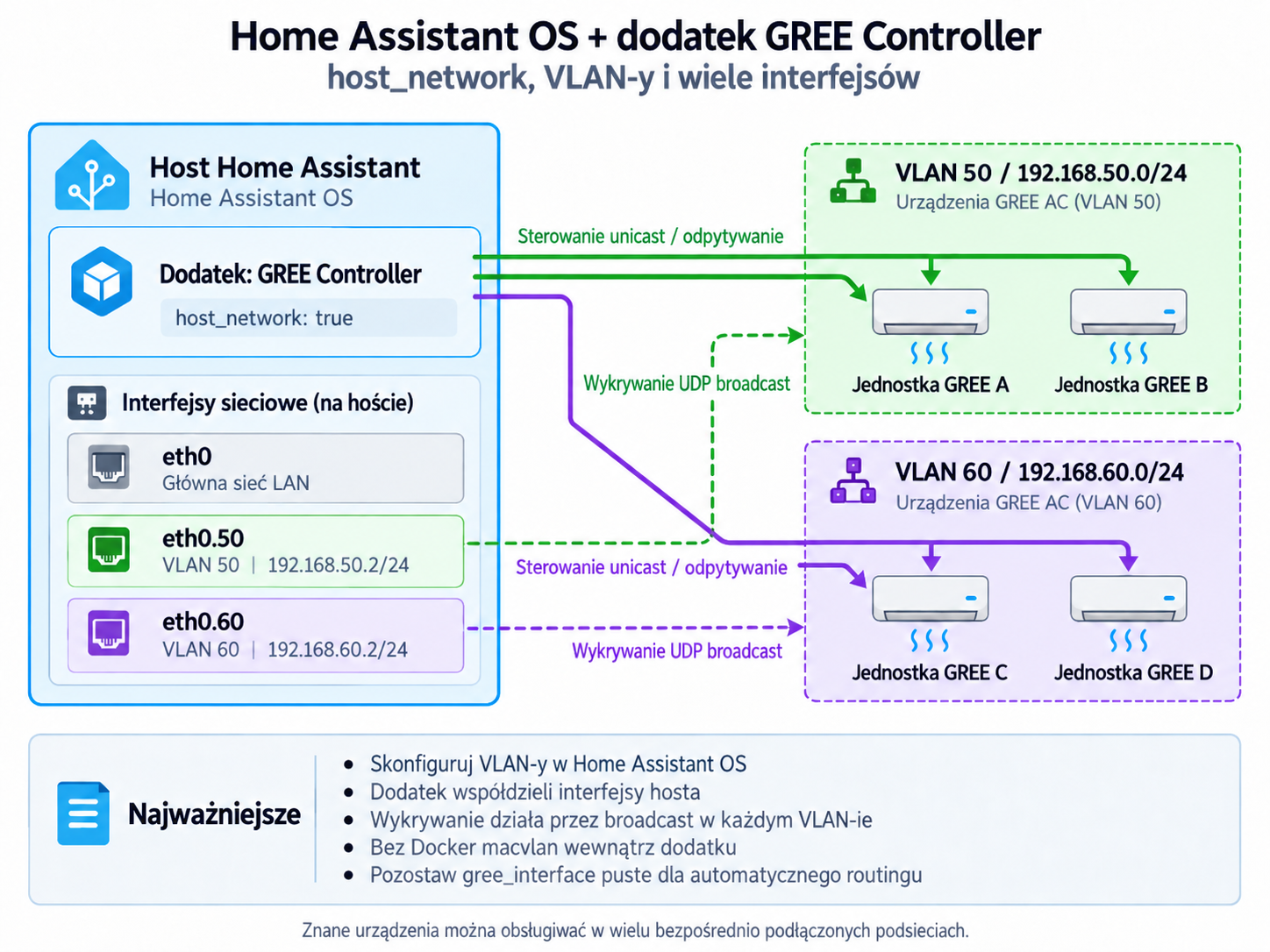
Dodatek celowo używa host_network: true, więc korzysta bezpośrednio z interfejsów hosta Home Assistant OS. Nie twórz dla niego Docker macvlan.
Interfejsy hosta:
ha network info
Przykład VLAN 50 na eth0, bez dodatkowej bramy domyślnej:
ha network vlan eth0 50 \
  --ipv4-method static \
  --ipv4-address 192.168.50.2/24 \
  --ipv6-method disabled
Dla jednej sieci GREE ustaw gree_interface na nazwę interfejsu (np. eth0.50) albo jego lokalny IPv4 (np. 192.168.50.2) oraz discovery_broadcast na broadcast tej podsieci, np. 192.168.50.255:7000.
Dla wielu bezpośrednio podłączonych podsieci pozostaw gree_interface puste. Kontroler dobiera lokalny interfejs najlepiej pasujący do IP znanego urządzenia. Discovery nadal wysyła jeden broadcast na skan, więc każdą podsieć/VLAN skanuj osobno, zmieniając discovery_broadcast, albo dodaj znane urządzenia ręcznie.
Broadcast zwykle nie przechodzi przez router. Sterowanie unicast może działać przez routing/firewall, jeżeli UDP jest dozwolone. Gdy urządzenia są w routowanym VLAN-ie, zapewnij hostowi HA interfejs w tej sieci, relay broadcast UDP albo wykonuj discovery lokalnie dla każdej podsieci.
Opcje
| Opcja | Znaczenie |
|---|---|
gree_interface |
interfejs lub lokalny IPv4; puste = automatyczny dobór trasy |
discovery_broadcast |
cel discovery UDP, np. 192.168.50.255:7000 |
simulate |
praca bez fizycznych urządzeń |
auto_seed |
przykładowe urządzenie w pustej bazie symulatora |
poll_interval_seconds |
interwał odpytywania urządzeń |
zone_interval_seconds |
interwał sterowania strefami/termostatem |
discovery_timeout_ms |
timeout discovery UDP |
app_token |
opcjonalna ochrona bezpośredniego Web UI/API |
log_level |
error, warn, info, debug, trace |
Dostęp, dane i bezpieczeństwo
Usługa słucha na TCP 8787; ingress Home Assistant przekazuje Web UI na ten port. Jeżeli 8787 jest osiągalny z niezaufanej sieci, ustaw app_token albo zablokuj port firewallem. Baza jest zapisywana w /data/gree-controller.db; konfiguracja używa backup: cold, więc dane są objęte backupem dodatku.
Watchdog sprawdza /api/health. Do diagnostyki sieci najpierw sprawdź ha network info, poprawność gree_interface, broadcast konkretnej podsieci i reguły UDP/firewalla.
EN
Installation
Add this custom repository in Home Assistant:
https://git.linuxiarz.pl/gru/gree-controller-ha-addon/
Refresh the app/add-on store and install GREE Controller. config.yaml points to a pre-built multi-architecture OCI image; its tag must match version.
Networking, VLANs and discovery
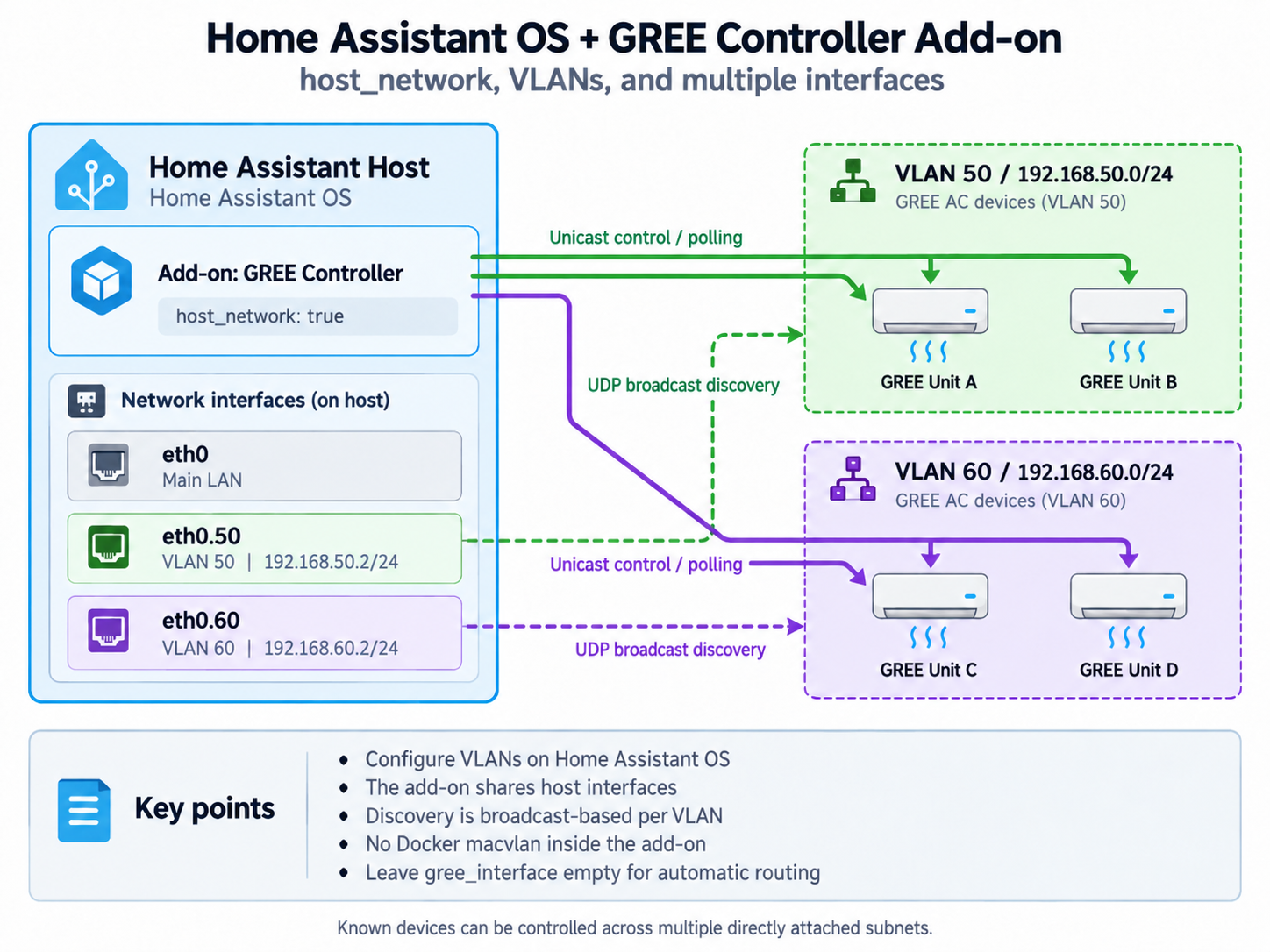
The add-on intentionally uses host_network: true, so it uses the Home Assistant OS host interfaces directly. Do not attach a Docker macvlan network to the add-on.
Inspect host interfaces with:
ha network info
Example VLAN 50 on eth0, without adding another default gateway:
ha network vlan eth0 50 \
  --ipv4-method static \
  --ipv4-address 192.168.50.2/24 \
  --ipv6-method disabled
For one GREE subnet, set gree_interface to the host interface name (for example eth0.50) or its local IPv4 address (for example 192.168.50.2), and set discovery_broadcast to that subnet broadcast, e.g. 192.168.50.255:7000.
For multiple directly attached subnets, leave gree_interface empty. The controller selects the local interface that best matches a known device IP. Discovery still sends one broadcast per scan, so scan each VLAN/subnet separately by changing discovery_broadcast, or add known devices manually.
Broadcast normally does not cross routers. Unicast control may work through routing/firewall rules when UDP is allowed. For routed GREE VLANs, give the HA host an interface in the VLAN, use a suitable UDP broadcast relay, or perform discovery locally per subnet.
Options
| Option | Meaning |
|---|---|
gree_interface |
interface or local IPv4; empty = automatic route selection |
discovery_broadcast |
UDP discovery target, e.g. 192.168.50.255:7000 |
simulate |
run without physical devices |
auto_seed |
create a sample device in an empty simulator database |
poll_interval_seconds |
device polling interval |
zone_interval_seconds |
thermostat/zone control interval |
discovery_timeout_ms |
UDP discovery timeout |
app_token |
optional protection for direct Web UI/API access |
log_level |
error, warn, info, debug, trace |
Access, data and security
The service listens on TCP 8787; Home Assistant ingress proxies the Web UI to that port. If 8787 is reachable from an untrusted network, configure app_token or block the port at the firewall. The database is stored in /data/gree-controller.db; backup: cold keeps it in the add-on backup.
The watchdog checks /api/health. For network troubleshooting, verify ha network info, gree_interface, the selected subnet broadcast, and UDP/firewall rules first.